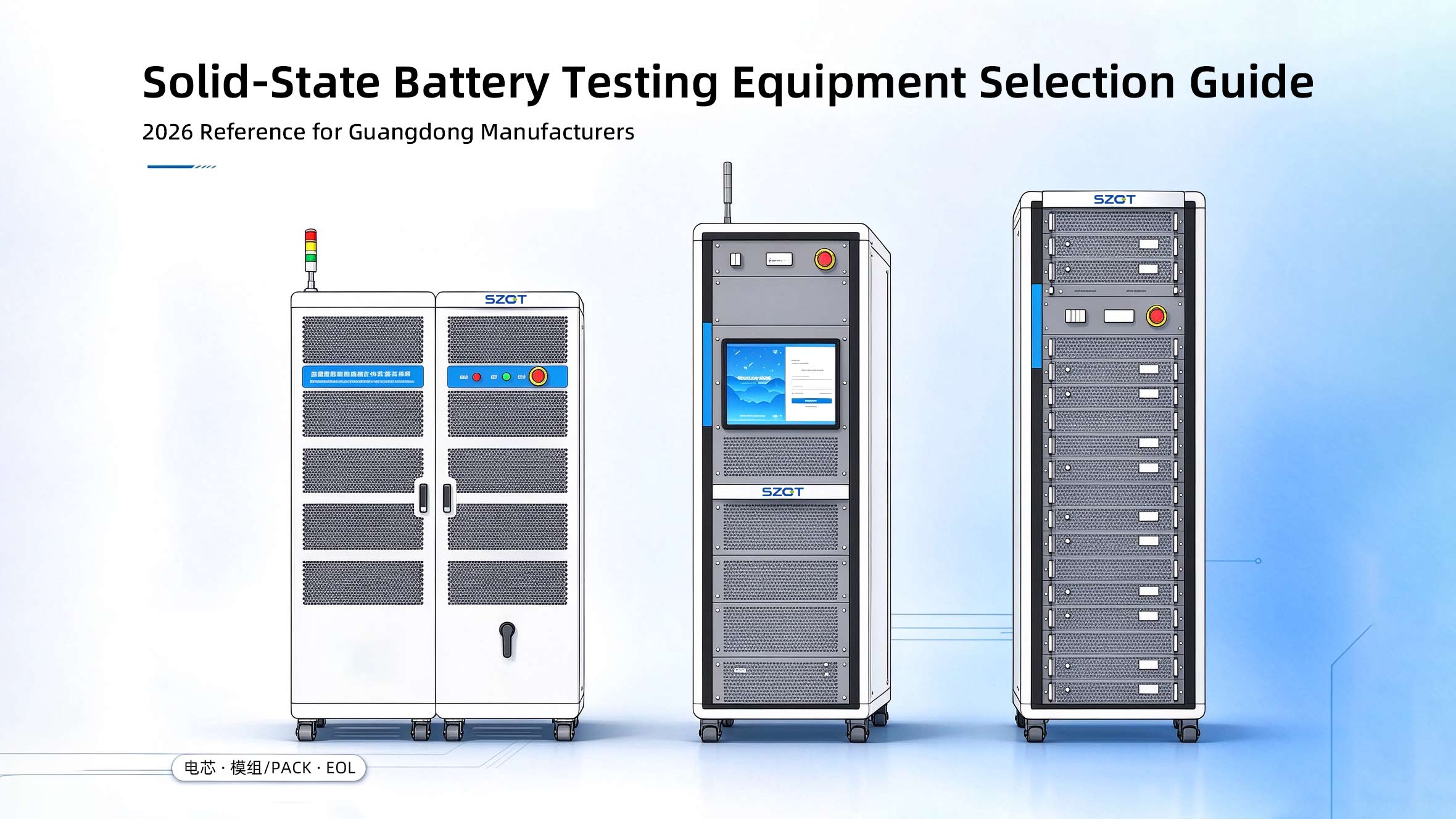

Everything You Need to Know About the Entire Manufacturing Process of Lithium-Ion Batteries!
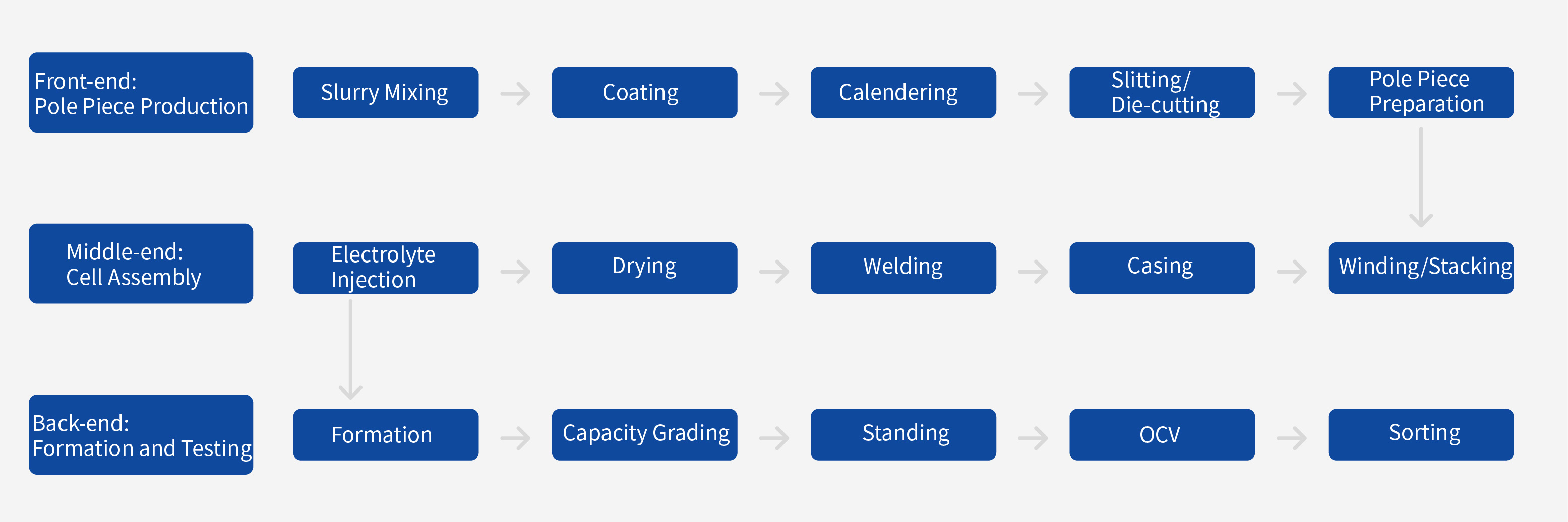
The manufacturing process of lithium-ion batteries is complex and sophisticated, mainly divided into three manufacturing stages: the front-end pole piece production, the middle-end cell assembly, and the back-end formation and testing. The specific process is as follows:
1. Front-End: Pole Piece Production
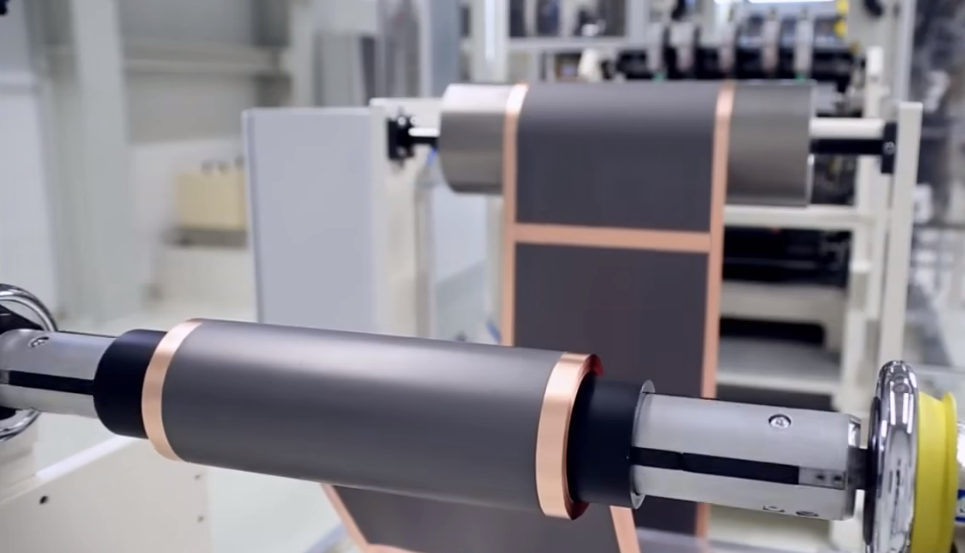
The front-end is the core foundation of lithium-ion battery manufacturing, mainly covering key processes such as slurry mixing, coating, roll pressing, slitting/die-cutting, and pole piece cutting. It imposes strict requirements on the equipment's performance stability, process precision, automation level, and production efficiency. Among them, coating, roll pressing, and slitting are the core processes that determine the quality of pole pieces.
Coating
Evenly stirred positive/negative electrode slurries are accurately coated on the surfaces of the positive electrode substrate (aluminum foil) and negative electrode substrate (copper foil) respectively. After high-temperature drying, initial pole pieces are formed. As a core technology in the R&D and production of lithium-ion batteries, coating uniformity directly determines the battery's consistency, electrochemical performance, and cycle life.
Roll Pressing
The dried pole pieces are rolled with high-precision rollers to further improve the density of active materials and the adhesion strength of the foil, thereby optimizing the battery's energy density and structural stability.
Slitting
Wide-width pole pieces are continuously longitudinally cut into narrow-width pole pieces that meet production requirements. This process requires dimensional accuracy up to the micron level, and it is necessary to ensure that the pole pieces have a smooth and flat surface without wrinkles or powder shedding, while controlling edge burrs within strict industry standards.
2. Middle-End: Cell Assembly
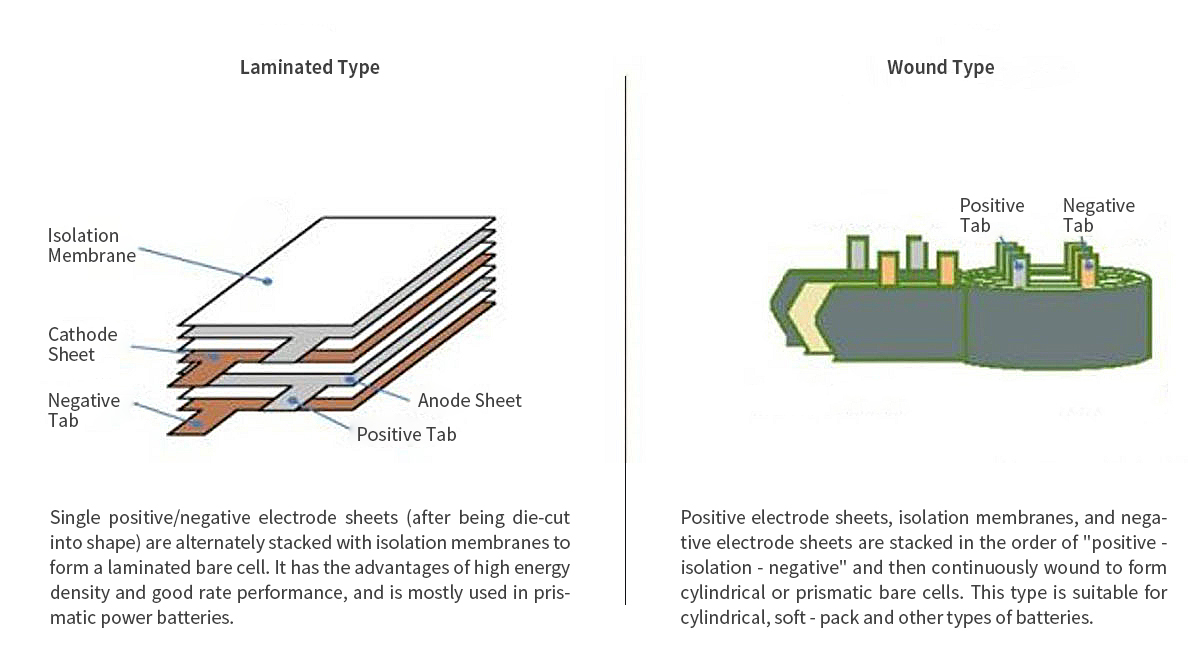
The middle-end focuses on the forming and pre-packaging of bare cells, mainly including processes such as winding/stacking, tab welding, cell casing, vacuum drying, electrolyte injection, and sealing. It has extremely high requirements for equipment precision control, production efficiency, and consistency. The core equipment includes winding/stacking machines, laser welding machines, vacuum drying equipment, high-precision electrolyte injectors, etc. Among them, winding or stacking is the core step in the forming of bare cells.
3. Back-End: Formation and Testing
The back-end is a key link for activating cell performance and controlling product quality, mainly including processes such as cell formation, capacity grading, resting, OCV (Open Circuit Voltage), and sorting. The corresponding equipment includes charging and discharging equipment, formation and capacity grading systems, etc. Among them, formation and capacity grading directly determine the final qualification rate and batch consistency of cells, and are crucial parts in the back-end process.
Formation
Through preset charge-discharge procedures, the internal electrochemical activity of the cell is activated, enabling the electrode materials to form a stable SEI film (Solid Electrolyte Interface film), allowing the cell to have stable electricity storage capacity for the first time.
Capacity Grading
The formed cells are subjected to capacity and performance sorting. Based on key parameters such as capacity, internal resistance, and voltage, cells with consistent performance are classified and grouped, ensuring the overall consistency and cycle life of battery packs from the source.
Charging and Discharging Test Equipment
Charging and discharging test equipment collects real-time data and curves such as voltage, current, and capacity during the cell's charge-discharge process. Combined with specialized testing of voltage and internal resistance before and after resting, it provides a core basis for cell qualification judgment and grading.
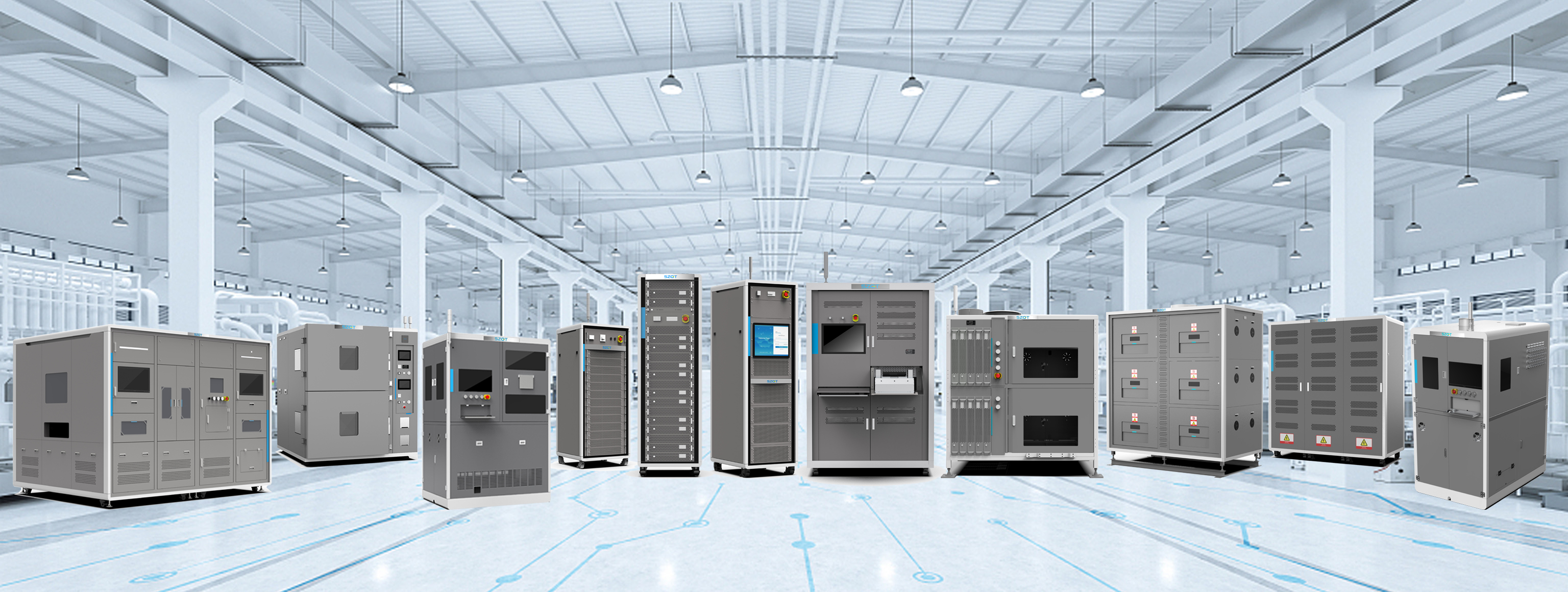
SHENZHEN GEEKTEST: A Full-Process Solution Provider for the Back-End
Shenzhen Geektest Technology Co., Ltd., with its profound technical accumulation in embedded system development, intelligent monitoring algorithms, fully digital power supply design, bidirectional energy feedback technology, and mechanical automation control, focuses on providing high-precision and high-efficiency testing equipment and automated production line solutions for the new energy industry. It particularly has full-process service capabilities in the back-end processing field.
Core Solutions Cover Three Major Fields
1. Battery Testing: Charge-discharge testing for cells/modules/Packs, R&D stage testing, experimental reliability testing, module/Pack EOL testing
2. Automotive Electronics Testing: Air tightness testing, FCT & EOL testing, aging testing, testing for large/small three electric systems and domain control systems
3. Intelligent Manufacturing: Formation and capacity grading production lines, module/Pack assembly lines, energy storage container assembly lines, automotive electronics assembly lines, etc.
GEEKTEST's system solutions serve a wide range of diverse fields including cells, modules, Packs, automotive electronics, and intelligent manufacturing. It is committed to providing customers with stable, reliable, and efficient overall solutions, helping battery enterprises improve production quality, optimize production efficiency, and continuously enhance core competitiveness.